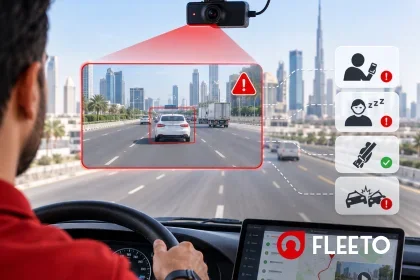
They also add cost, data volume and sensitive questions about privacy. The right answer is not the same for every fleet, and many operations are well served by GPS and sensor data alone. The question is which risks you are actually trying to manage.
What GPS and sensors already tell you
A standard telematics setup records location, speed, harsh braking, acceleration and cornering, idling, trip history and, with the right sensors, fuel and engine data. For many fleets, this is enough to manage cost, route efficiency, utilisation and general driving quality.
What it cannot tell you is why something happened. A harsh braking event shows that a driver stopped suddenly. It does not show whether they braked because a car cut in front of them or because they were distracted.
What video adds
Context for events. A short clip around a harsh event shows what really happened, which protects drivers who did the right thing as much as it identifies those who did not.
Evidence for incidents and claims. Footage of a collision can speed up insurance claims, reduce liability disputes and deter fraudulent claims. This is often the strongest financial argument for cameras.
Detection of distraction and fatigue. Driver-facing cameras with AI can flag phone use, drowsiness, smoking and missing seatbelts, behaviours that GPS data cannot see at all.
Forward-collision and lane-departure awareness. Some systems warn drivers in real time, aiming to prevent incidents rather than merely record them.
Coaching material. Real clips make coaching sessions concrete and are far more persuasive than a score on a screen.
When GPS alone is usually enough
● The fleet is mainly concerned with location, utilisation and fuel rather than safety incidents
● Vehicles are low-risk, low-mileage or used mostly on controlled sites
● Budgets are tight and the cost of cameras and data would outweigh the benefits
● Driver relations are fragile and the fleet is not ready to introduce in-cab cameras
When video earns its place
● Passenger transport, school buses, taxis and limousines where safety and accountability are paramount
● Heavy vehicles, tankers and hazardous loads where one incident carries a very high cost
● High-mileage delivery and last-mile fleets with frequent incidents and claims
● Fleets facing rising insurance premiums or frequent disputed claims
● Operations where driver behaviour is a regulatory or contractual obligation
Getting it right
Be transparent with drivers. Explain what is recorded, when, who can see it and how it will be used. Secret or poorly explained cameras destroy trust. Look at the applicable data protection and privacy requirements for your markets and get appropriate advice before deploying driver-facing cameras.
Limit access and retention. Footage should be available to a small group, stored securely and deleted on a clear schedule, with event clips kept longer only where needed.
Manage data volume. Continuous video is heavy. Event-triggered clips uploaded over mobile networks keep costs sensible, with full footage retrieved on request.
Focus on coaching, not surveillance. Fleets that use video primarily to support and protect drivers see better acceptance than those that use it to catch them out.
Integrate with telematics. Video is most useful when linked to location, speed and event data on one platform, rather than managed in a separate system.
Why choose Fleeto
Fleeto supports video telematics alongside GPS and sensor data on one dashboard, linking event clips to the trip, location and driver score behind them. Fleets can start with GPS and add cameras to the vehicles and routes that justify them, and the white-label platform lets partners offer both without running separate systems.
Fleeto's fleet management software lets fleets add video evidence where it pays off and keep GPS-only tracking where it is enough.